Deck Cleaning In Melbourne
Deck Cleaning Experts
Pressure washing, house washing and exterior cleaning across Frankston, the Mornington Peninsula and Melbourne's south east.
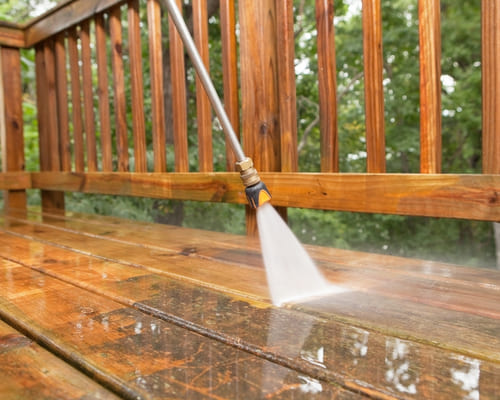
TopTier Exterior Service cleans and restores decks across Melbourne's south east, from Clyde and Berwick through Frankston to Mount Eliza, Sandringham and the Peninsula. Timber decking in this climate goes grey, furry and slippery within a few seasons, and the reason is not dirt: it is ultraviolet breaking down the surface fibres while mould and algae colonise the damp side. Cleaning a deck is therefore a chemical job rather than a pressure job, because high pressure on timber raises the grain, tears out the soft spring wood between the growth rings and leaves a furred surface that traps more water than it started with. We clean, neutralise, sand where the board condition calls for it, and re-oil or seal so the timber is protected rather than just exposed. Composite decking is handled differently again. Call Razz on 0430 392 100.
GET A FREE QUOTE
TopTier Exterior Service
The Decks We Clean
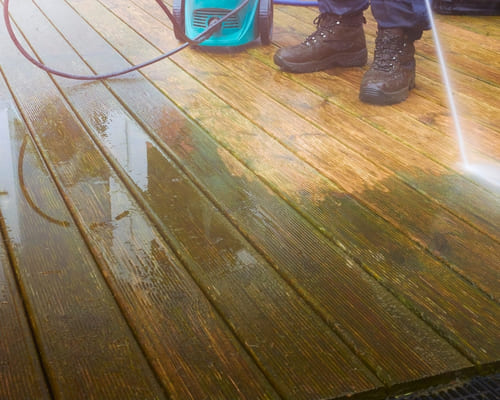
Deck work across the south east falls into four categories. Timber decks are the bulk of it, mostly merbau, spotted gum, blackbutt and treated pine, each of which behaves differently: merbau bleeds tannin and stains the concrete below it, spotted gum and blackbutt are dense and hold their surface longer, and treated pine is soft and furs quickly if it is ever hit with too much pressure. Composite decking is now common on the newer builds at Clyde North, Cranbourne and Berwick, and while it does not need oiling, it absolutely does grow mould in the board grooves and along the shaded edges, and it is easily scratched and heat-marked by aggressive cleaning. Deck stripping is the third category, needed when an old oil or stain coat has broken down into a patchy, flaking film that no new coat will sit on properly, and it is the messiest and most labour-intensive part of this trade. Re-oiling and sealing is the fourth, and it is the step that decides whether the whole exercise lasts two years or two months. We also handle deck balustrades, stairs, pergola posts, screening and the sub-frame areas where the worst of the growth usually hides. Decking that sits over or beside a pressure washed patio is normally done in the same visit.
TopTier Exterior Service
How We Restore a Deck
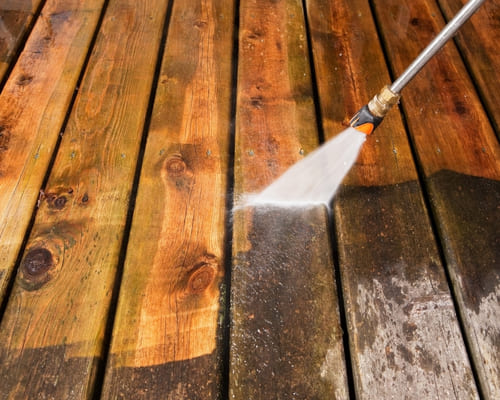
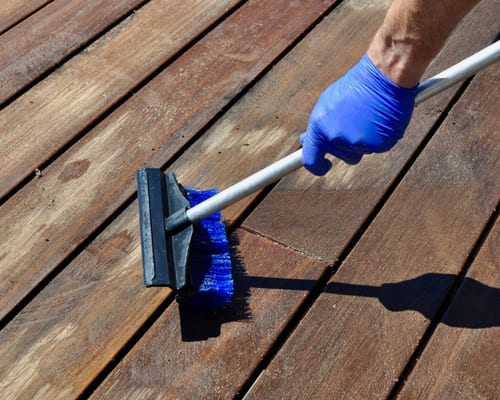
Restoring a deck runs in three stages and the order is not negotiable. First, clean and neutralise. A timber deck cleaner is applied and worked into the boards to lift the grey oxidised surface layer, the mould and the old degraded oil, and it is then rinsed at low pressure with a fan tip kept moving along the grain rather than across it. Because most deck cleaners are alkaline and open up the timber, a neutralising or brightening rinse follows to bring the pH back and restore the natural colour rather than leaving the boards looking bleached. Second, sand where needed. Not every deck needs sanding, and sanding a sound deck is wasted money, but where boards have furred, splintered or lifted, or where an old coating has failed unevenly, a sand is what gives the oil a consistent surface to key into. Nail and screw heads are checked and punched at this stage. Third, oil or seal. The deck must be dry right through before any coating goes on, which in Melbourne generally means a clear couple of days rather than a same-day turnaround, and the coat is applied along the boards and worked into the end grain where water gets in first. Rushing the drying stage is the single most common cause of a coat that peels within a season. The numbers on decking matter. Cleaner is rinsed at 500 to 800 psi with a wide 40 degree fan kept moving along the grain, never across it and never above about 1,000 psi, because higher pressure tears out the soft spring wood between the growth rings. Deck cleaners are typically alkaline, so a neutralising or oxalic acid brightening rinse follows to bring the pH back. Timber should be down to roughly 15 per cent moisture content before any coat goes on, which in Melbourne usually means 24 to 48 hours of dry weather.
TopTier Exterior Service
Why Decks Go Grey and Slippery
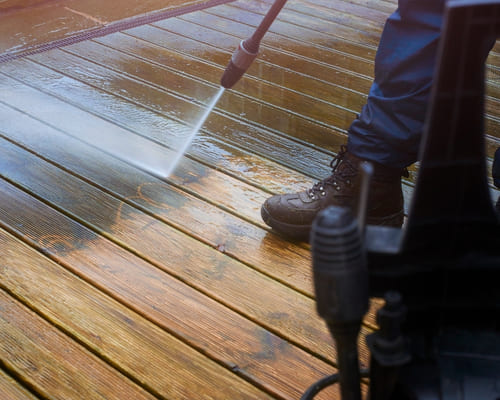
Understanding why decks fail explains why the fix has to be done properly. The grey is not dirt. Ultraviolet light breaks down lignin, the natural binder holding the wood fibres together at the surface, and what is left is a layer of loose, silvered cellulose fibre. Water then gets into that open surface, and in a shaded, damp Melbourne winter, mould and algae colonise it, which is what makes a deck slippery rather than merely dull. That is why hosing a grey deck achieves nothing: the grey is the timber itself, degraded, and it has to be chemically lifted and physically removed. It also explains why high pressure is such a bad answer. Blasting a deck does remove the grey, along with the soft spring wood between the growth rings, leaving a corrugated, furred surface with vastly more area for water and mould to sit in. The deck looks better for a month and is worse forever. Decks facing south, sitting under tea tree or eucalypt canopy, or built close to ground level with poor airflow underneath, go through this cycle fastest, which is most of the established Peninsula and bayside stock through Frankston South, Mount Eliza, Beaumaris and Sandringham. TopTier works the chemistry, not the pressure, and Razz does the work himself. Decks are commonly booked with a house wash so the wall behind the deck finishes to the same standard.
TopTier Exterior Service
What Deck Cleaning Costs
Deck cleaning is quoted by square metre, with the condition of the timber and the scope of coating work moving the figure considerably. The base measurement is straightforward: length by width of the deck, plus stairs, landings, balustrade, screening and any pergola posts you want included, since those are usually the parts a cheap quote leaves off. Condition is the first real variable, because a deck cleaned and oiled two years ago needs a wash and a maintenance coat, while one that has not been touched in eight years needs stripping, heavy cleaning, neutralising and sanding before a coat can even be considered. Whether an existing coating has to come off is the single biggest price driver in this trade, as stripping is slow, chemical-heavy work. Timber species matters too, since dense hardwoods take more product and more passes than treated pine. Sanding is quoted separately because not every deck needs it and you should not pay for it if yours does not. The oil or decking product itself is quoted by coverage and by how many coats the timber will take, which depends on how thirsty it is. Access, height above ground and whether the area can be closed off while it dries all factor in. Send photos and dimensions to 0430 392 100.
TopTier Exterior Service
Clean and Re-Oil vs Full Restoration
The choice between a maintenance clean and a full restoration comes down to what state the coating is in, not how old the deck is. Clean and re-oil suits a deck that has been looked after: the timber is sound, the boards are flat, the previous coat has worn thin and evenly, and there is surface mould and greying but no splintering. That job is a wash, a neutralise, a dry-out and a fresh coat, and it is the cheapest and fastest option by a wide margin. Full restoration is what a neglected deck needs: an old coating that has gone patchy and flaky has to be stripped completely, because oil will not bond to a failing film, and any new coat put over it will lift within months and look worse than before. Add heavy greying, furred or splintered boards, loose fixings and end-grain rot starting at the joins, and you are into stripping, sanding, repairs and multiple coats. The honest guidance is that spending on a restoration when a maintenance clean would do is wasted, and spending on a maintenance clean when the coating has already failed is money thrown away twice. We will tell you which one your deck actually needs after seeing photos. Call 0430 392 100.
Related Deck Cleaning Services in

Driveways, paths, patios, walls and fences across Frankston and the Peninsula, cleaned at the pressure each surface will actually take. Even passes with a surface cleaner, no wand stripes, no etched render, and a written price before we start.
Render, weatherboard, brick and cladding washed properly across Melbourne's south east. Low pressure, right chemistry, mould and lichen killed at the root rather than just knocked off, so the walls stay clean through the next wet winter.
Moss, lichen and algae taken off concrete tile, terracotta and Colorbond roofs across Frankston and the Peninsula, at pressure the tiles will actually survive, with the gutters cleared down afterwards so nothing is left sitting in them.
TESTIMONIALS
What Our Deck Cleaning Customers Say About Us
The Process
3 Step Process For Your Deck Cleaning Needs

Send Photos
Text or email a couple of photos of the surfaces you want cleaned. We come back with a written price, usually the same day.

We Clean
We arrive at the agreed time, protect plants, drains and fittings, then work through every surface in the scope from top to bottom.

Walk Round
We walk the property with you before packing up, so anything you are not happy with gets put right there and then.
Deck Cleaning In
FREQUENTLY ASKED QUESTIONS
Everything you need to know about our Deck Cleaning In
How much does deck cleaning cost?
Deck cleaning is quoted by square metre, and the biggest single price driver is whether an existing coating has to be stripped off first. A deck that was cleaned and oiled a couple of years ago needs a wash, a neutralising rinse and a maintenance coat, which is the cheapest end of the work. A deck left for years with a flaking, patchy old coat needs stripping, heavier cleaning and often sanding before any oil can go on. Stairs, balustrade, screening and pergola posts are quoted as part of the scope if you want them included. Send photos and rough dimensions to 0430 392 100.
Can you bring back a grey, weathered deck?
In most cases yes, because the grey is a degraded surface layer of timber rather than dirt, and it can be chemically lifted and removed to expose sound wood underneath. A deck cleaner opens up and releases that oxidised layer, a neutralising or brightening rinse restores the natural colour rather than leaving the boards bleached, and a sand is added where boards have furred or splintered. What cannot be reversed is genuine rot, structural movement or boards that have cupped badly, and we will tell you honestly if that is what we are looking at rather than take the job anyway.
How long before I can walk on it?
The cleaning stage is same day, and the deck can generally be walked on lightly once it has dried off. Coating is the part that needs patience. The timber must be dry right through before oil goes on, which in Melbourne usually means a clear day or two after the wash rather than the same afternoon, and once oiled most decking products want a further day or so before normal foot traffic and considerably longer before furniture goes back on. Rushing the dry-out is the most common cause of a coat that peels within a season. We will give you the actual timeline for your product when we quote.
Do you re-oil after cleaning?
Yes, and cleaning without re-oiling is usually a false economy on timber. Once a deck has been cleaned, the surface is open and unprotected, so leaving it bare means ultraviolet light starts breaking down the fibres again immediately and you are back to grey within a season or two. The coat is applied along the boards and worked into the end grain at the joins, which is where water gets into a deck first. How many coats the timber takes depends on how thirsty it is, so the quote covers coverage rather than assuming one pass. Composite decking does not need oiling and is not coated.
How often should a deck be cleaned?
A timber deck in Melbourne's south east generally wants a clean and a maintenance coat every 12 to 24 months, and the position of the deck matters more than the calendar. Decks facing south, sitting under tea tree or eucalypt canopy, or built low to the ground with poor airflow underneath, cycle fastest and often need annual attention. An exposed north-facing deck may hold up for two years but takes more ultraviolet damage when it does go. The practical signal is grip: when a deck starts feeling slippery underfoot after rain, mould has colonised the surface layer and it is due, regardless of how it looks.
Do you clean composite decking?
Yes. Composite boards do not need oiling and will not go grey the way timber does, but they are far from maintenance free, because mould and algae grow readily in the board grooves and along shaded edges, and ground-in dirt dulls the surface. Composite is cleaned with the appropriate detergent at low pressure and worked along the grooves, since aggressive pressure scratches the surface, marks the embossed grain and can leave permanent heat or wand marks that no amount of later cleaning will remove. Manufacturer guidance varies by brand, so tell us which product your deck is when you enquire on 0430 392 100.
Request A Free Deck Cleaning Quote
GET A FREE QUOTE
BUSINESS
SERVICES
SERVICE AREAS
OPERATING HOURS
Sun: 7:00am - 9:00pm
Mon: 7:00am - 9:00pm
Tue: 7:00am - 9:00pm
Wed: 7:00am - 9:00pm
Thu: 7:00am - 9:00pm
Fri: 7:00am - 9:00pm
Sat: 7:00am - 9:00pm