Tennis Court Cleaning In Melbourne
Tennis Court Cleaning Experts
Pressure washing, house washing and exterior cleaning across Frankston, the Mornington Peninsula and Melbourne's south east.
TopTier Exterior Service cleans tennis courts across Melbourne's south east and the Mornington Peninsula, on private home courts, school courts and club facilities. Court cleaning is a safety job before it is a cosmetic one, because the black and green film that builds on a shaded court is living algae, and algae on a wet synthetic or acrylic surface is genuinely slippery underfoot. It also holds moisture in the surface, which shortens the life of the court and, on synthetic grass, causes the infill sand to bind into a hard crust that kills the ball bounce and the footing at the same time. Every surface type takes a different pressure and a different treatment, and getting that wrong is expensive because a damaged court is resurfaced, not repaired. Call Razz on 0430 392 100.
GET A FREE QUOTE
TopTier Exterior Service
The Courts We Clean
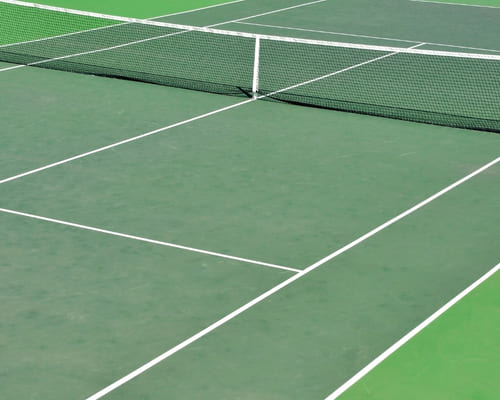
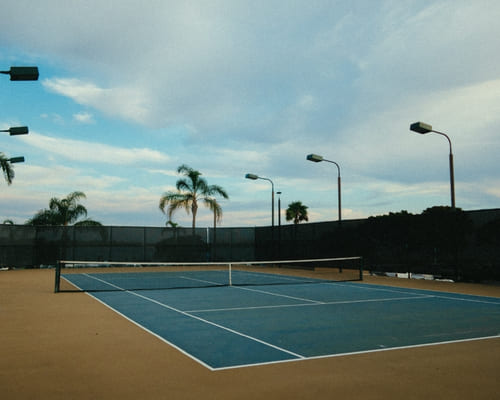
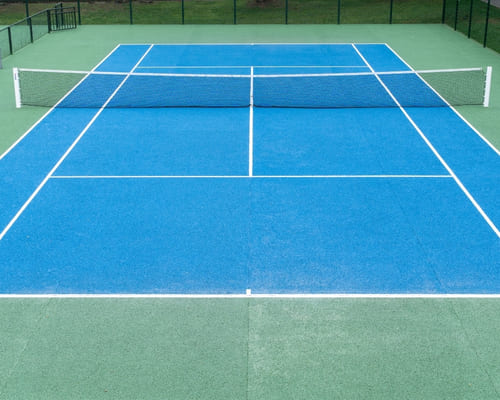
Court surfaces around Melbourne's south east fall into four groups and none of them are cleaned the same way. Synthetic grass courts are the most common on private properties through Mount Eliza, Frankston South, Beaumaris, Langwarrin and the larger blocks at Somerville and Berwick, and they are the most technical to clean, because the playing characteristics depend on sand infill sitting at the right depth between the fibres. Clean one too aggressively and you strip the sand out; clean it too gently and the sand stays crusted and contaminated. Acrylic hard courts, the cushioned or painted concrete and asphalt surfaces found at most schools and clubs, are more robust but the acrylic colour coat is a finite layer that will not survive high pressure and cannot be repaired without resurfacing the whole court. En tout cas and clay courts are the third group, rarer now but still in use, and they need entirely different treatment focused on the top dressing and drainage rather than a wash. Surrounds and fencing are the fourth, covering the concrete or paved aprons, the chain wire or mesh fencing that collects grime and cobwebs, net posts, seating and any shade structure, all of which look worse than the court once the court itself is clean.
TopTier Exterior Service
How We Clean a Court Without Damage
Cleaning a court without wrecking it comes down to three things. Surface-appropriate pressure is the first and the most important. Synthetic grass is cleaned at low to moderate pressure with the lance kept moving and held at a controlled distance, so the contamination lifts out of the pile without stripping the sand infill or fraying the fibre tips. Acrylic hard courts are cleaned more gently still, because the colour coat is a thin acrylic layer over the base and high pressure removes it in patches that only a full resurface will fix. Moss and mould treatment is the second, and it is where the real cleaning happens: an appropriate treatment is applied and given dwell time to kill the algae, moss and mould biologically, right down into the pile or the surface texture, rather than the growth simply being knocked off the top. That is what stops a court going green again within a season. Rinse and re-sand where needed is the third. Everything lifted is rinsed clear of the playing surface and out of the drainage, and on synthetic grass the infill is checked, redistributed and topped up where the clean has taken sand with it. A court left short of infill plays badly and wears out faster, so this is not an optional finishing touch. On numbers, synthetic grass is cleaned at roughly 800 to 1,200 psi with the lance kept moving at a controlled distance, and acrylic hard courts lower again, against the 3,000 to 4,000 psi used on a driveway. Moss and mould treatments are sodium hypochlorite based with a surfactant and need 15 to 20 minutes of dwell. Synthetic infill should sit roughly 2 to 3mm below the fibre tips, so the sand is checked against that after cleaning and topped up where it is short.
TopTier Exterior Service
Why Court Surfaces Go Slippery
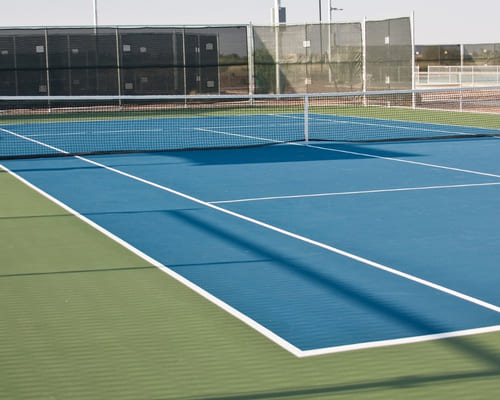
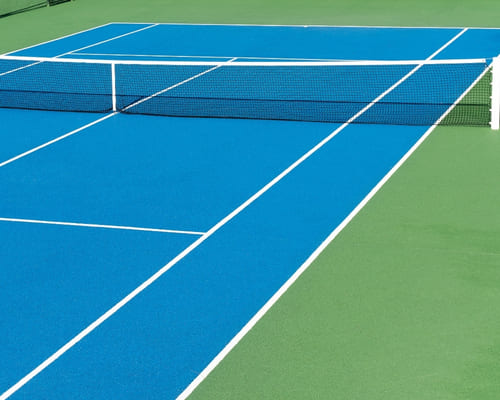
Courts go slippery for a specific reason and it is not dirt in the ordinary sense. A tennis court is a large, flat, often shaded surface that holds water, and that is close to ideal growing conditions for algae, moss and mould. On any court with a fence line of trees, a southern aspect or overhanging canopy, and most private courts in the established Peninsula and bayside streets have at least one of those, the surface stays damp long after rain has cleared elsewhere. Algae colonises the texture of an acrylic surface and the pile of a synthetic one, and when it is wet it behaves like a lubricant, which is how a court that looks merely discoloured becomes a genuine fall risk. On synthetic grass the problem compounds, because organic matter, fallen leaf and dust work down into the sand infill, hold moisture there permanently, and bind the sand into a crust. That crust changes the ball bounce, changes the footing, stops the surface draining properly and accelerates fibre wear. Once drainage fails, the court holds water even longer, which grows more algae, and the cycle tightens. Cleaning on a rhythm breaks it. TopTier applies the same treat-and-dwell approach used in roof cleaning rather than trying to solve a biological problem with force.
TopTier Exterior Service
What Tennis Court Cleaning Costs
Court cleaning is quoted on the surface area, the surface type and the condition, and courts are large enough that those figures move a quote considerably. A standard full-size court is a substantial area of hard surface in its own right, and doubles courts, multi-court school and club facilities, and courts with a run-off apron all scale from there. Surface type is the next factor: synthetic grass takes longer than acrylic because of the infill work at the end, and clay or en tout cas is a different job again. Condition is the biggest variable. A court cleaned every couple of years carries surface film that comes off in a straightforward treat-and-rinse pass. A court that has been left for a decade under trees, with moss established in the seams, organic matter compacted into the infill and drainage no longer working, needs heavier treatment, more dwell and considerably more time. Sand infill top-up is quoted by volume as a materials item where the court needs it. Surrounds, fencing, net posts and shade structures are quoted as listed extras so you can choose. School and club work is often scheduled outside term or season and priced with that access in mind. Send photos to 0430 392 100.
TopTier Exterior Service
Clean vs Resurface
The decision between cleaning and resurfacing is usually decided by what is wrong rather than by how old the court is, and it is worth getting right because the cost gap between the two is enormous. Cleaning is the answer when the court structure is sound and the problem is on the surface: discolouration, black and green algae film, moss in the seams and around the fence line, contaminated or crusted infill, and loss of grip that follows from those. That describes the majority of courts people assume are finished. Resurfacing is the answer when the surface itself has failed. On acrylic that means the colour coat has worn through to the base across the playing lines and high-traffic zones, or the base has cracked and moved. On synthetic grass it means the fibres have worn flat, the backing has become brittle, the seams have opened, or the surface has torn. Neither of those is a cleaning problem and no amount of washing will bring them back. What cleaning does do is postpone resurfacing, sometimes by years, because a court that drains properly and is not carrying permanent moisture and organic matter deteriorates far more slowly. TopTier does cleaning, not resurfacing, so if the honest answer is that your court is finished, that is what you will be told. Court surrounds, paths and fencing are quoted alongside the court under pressure washing. Call 0430 392 100.
Related Tennis Court Cleaning Services in

Driveways, paths, patios, walls and fences across Frankston and the Peninsula, cleaned at the pressure each surface will actually take. Even passes with a surface cleaner, no wand stripes, no etched render, and a written price before we start.
Render, weatherboard, brick and cladding washed properly across Melbourne's south east. Low pressure, right chemistry, mould and lichen killed at the root rather than just knocked off, so the walls stay clean through the next wet winter.
Moss, lichen and algae taken off concrete tile, terracotta and Colorbond roofs across Frankston and the Peninsula, at pressure the tiles will actually survive, with the gutters cleared down afterwards so nothing is left sitting in them.
TESTIMONIALS
What Our Tennis Court Cleaning Customers Say About Us
The Process
3 Step Process For Your Tennis Court Cleaning Needs

Send Photos
Text or email a couple of photos of the surfaces you want cleaned. We come back with a written price, usually the same day.

We Clean
We arrive at the agreed time, protect plants, drains and fittings, then work through every surface in the scope from top to bottom.

Walk Round
We walk the property with you before packing up, so anything you are not happy with gets put right there and then.
Tennis Court Cleaning In
FREQUENTLY ASKED QUESTIONS
Everything you need to know about our Tennis Court Cleaning In
How much does tennis court cleaning cost?
Court cleaning is quoted on the surface area, the surface type and the condition. A single full-size court is a large area of hard surface in its own right, and multi-court school or club facilities scale from there. Synthetic grass takes longer than acrylic because the sand infill has to be checked, redistributed and topped up after cleaning. Condition is the biggest variable, since a court cleaned every couple of years is a straightforward treat-and-rinse pass while one left a decade under trees needs heavy treatment and much longer dwell. Fencing, surrounds and net posts are quoted as listed extras. Send photos to 0430 392 100.
Will cleaning damage a synthetic court?
Not when the pressure is right and the infill is looked after, which is exactly where inexperienced operators cause damage. Synthetic grass is cleaned at low to moderate pressure with the lance kept moving at a controlled distance, so contamination lifts out of the pile without stripping the sand infill or fraying the fibre tips. Too much pressure blows the sand out and leaves the court playing badly and wearing faster; too little leaves the crusted, contaminated sand in place and achieves nothing. After the clean the infill is checked, redistributed and topped up where it is short. That final step is included in how we work rather than sold as an extra afterthought.
How often should a court be cleaned?
Every one to two years suits most courts across Melbourne's south east, and shade decides where in that range yours sits. A court with a treed fence line, a southern aspect or overhanging canopy stays damp long after rain and will grow algae and moss considerably faster than one in open sun. Club and school courts with heavy use often need annual attention simply from traffic and organic debris. The practical signal is grip rather than colour: when the surface starts feeling slippery underfoot after rain, algae has colonised it and it is due. Waiting until drainage fails makes the eventual clean much more expensive.
Do you re-sand synthetic grass?
Yes, where the court needs it, and it is treated as part of doing the job properly rather than an optional add-on. Cleaning a synthetic grass court inevitably lifts some sand infill along with the contamination, and courts that were already short of infill before we arrived, which is most neglected ones, need topping up regardless. Sand sitting at the right depth between the fibres is what gives the court its ball bounce, its footing and its fibre support, so a court left short plays poorly and wears out faster. The infill is redistributed evenly and topped up by volume, quoted as a materials item so you can see what it costs.
Can you clean the surrounding fencing?
Yes, and it is worth including because the surrounds usually look worse than the court once the court is clean. That covers the chain wire or mesh fencing, which collects grime, cobwebs and wind-blown debris along its whole run, the concrete or paved apron around the playing surface, net posts, seating, shade structures and any pavilion or shed frontage. Fencing is cleaned at a pressure appropriate to the coating so galvanising and powder-coating are not stripped. These are quoted as listed extras rather than assumed, so you can pick what you want done. Mention it when you call 0430 392 100.
Do you service schools and clubs?
Yes. School and club court work is a natural fit for how we operate, because it is scheduled, repeatable and quoted against a written scope. Multi-court facilities are quoted per court with the surrounds and fencing listed separately, and work is generally scheduled outside term time or outside the playing season so courts are not out of action when they are needed. Access, keys, site induction requirements and any documentation your facility needs are worked out before the booking rather than on the morning. Annual or biennial programmes are the sensible arrangement for most facilities, since courts left to deteriorate cost far more to bring back. Call 0430 392 100.
Request A Free Tennis Court Cleaning Quote
GET A FREE QUOTE
BUSINESS
SERVICES
SERVICE AREAS
OPERATING HOURS
Sun: 7:00am - 9:00pm
Mon: 7:00am - 9:00pm
Tue: 7:00am - 9:00pm
Wed: 7:00am - 9:00pm
Thu: 7:00am - 9:00pm
Fri: 7:00am - 9:00pm
Sat: 7:00am - 9:00pm